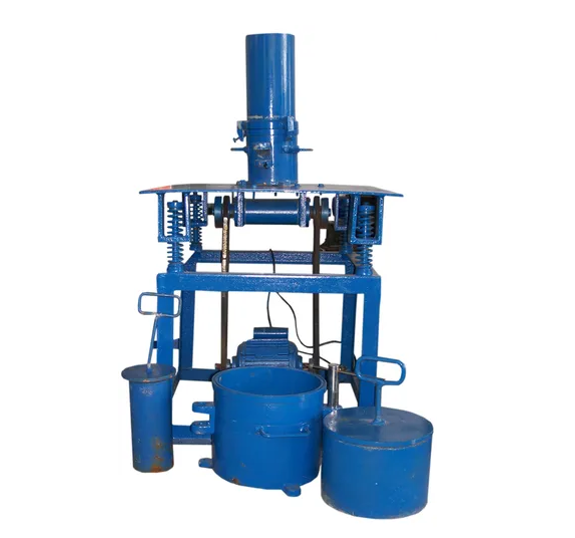
Relative Density Test (ME RDT)
The Relative Density Test is an important test in civil engineering that helps determine the relative compactness of cohesionless soils, such as sands and gravels.
Product Overview
The Relative Density Test is an important test in civil engineering that helps determine the relative compactness of cohesionless soils, such as sands and gravels.
The Relative Density Test is an important test
in civil engineering that helps determine the
relative compactness of cohesionless soils,
such as sands and gravels.
Application: It’s particularly useful in
geotechnical investigations to assess soil
stability for construction projects.
Understanding the relative density of soil
is essential for ensuring that structures
are built on a solid foundation.
For more details please refer datasheet.
Technical Specifications
The Relative Density Test is an important test
in civil engineering that helps determine the
relative compactness of cohesionless soils,
such as sands and gravels.
Application: It’s particularly useful in
geotechnical investigations to assess soil
stability for construction projects.
Understanding the relative density of soil
is essential for ensuring that structures
are built on a solid foundation.
For more details please refer datasheet.
Talk To Our Technical Experts
Related Products
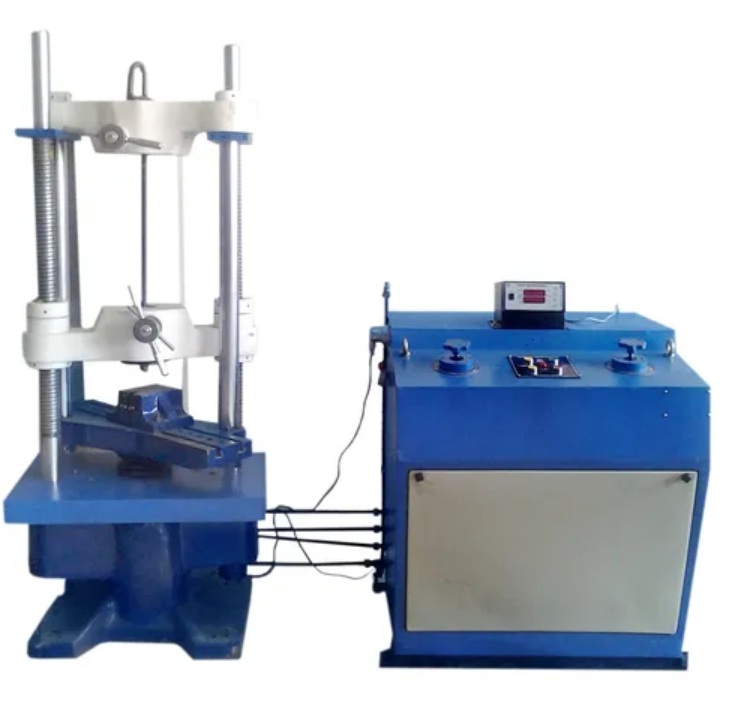
Universal Testing Machine (ME UTM)
The Universal Testing Machine (UTM) is a versatile piece of equipment widely used in material testing laboratories. Here are some key points about the UTM:

Free & Forced Vortex Apparatus (GN 7240)
To find the surface profile in a free vortex flow

Venturimeter Test Rig (GN 7222)
The whole set-up is well designed and arranged in a good quality painted structure made of square pipe 1280mm x 320mm x 920mm (LxBxH)
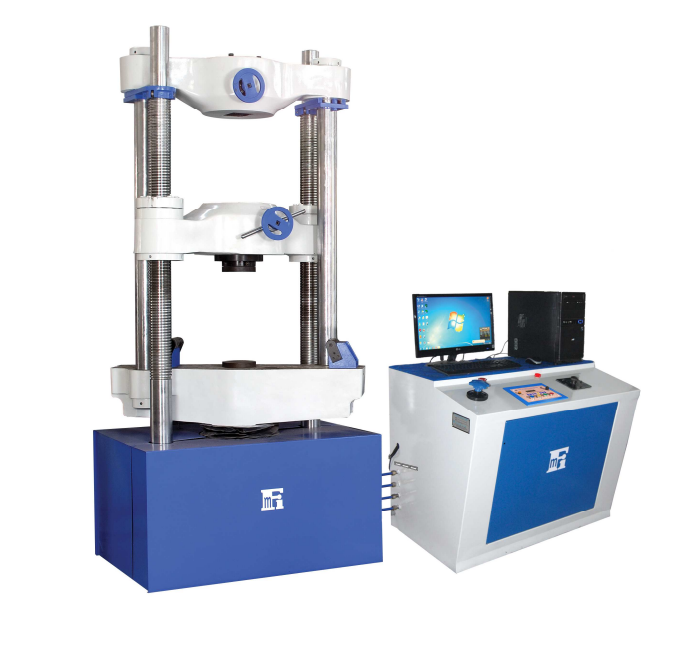
Universal Testing Machine (Computerized )
Universal Testing Machines have a wide range of applications and number of materials, metals in different form and shapes can be tested for variety of tests like Tension, Compression, Transverse, Bend, Shear, Brinell Hardness etc.Special attachments are a